High quality control in the production process of plastic masterbatch
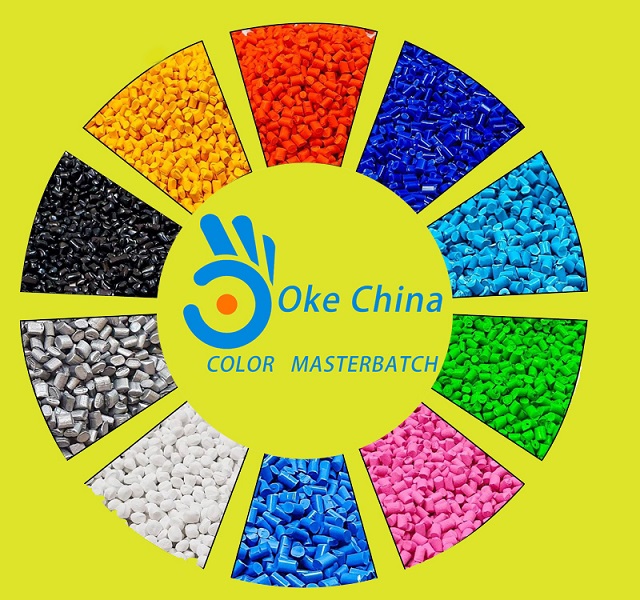
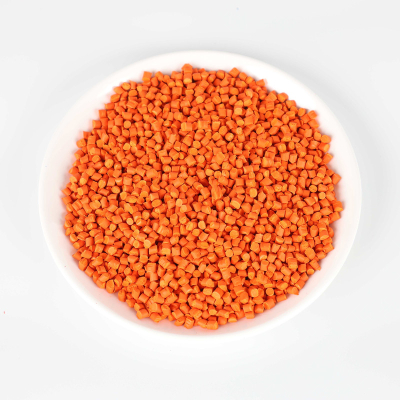
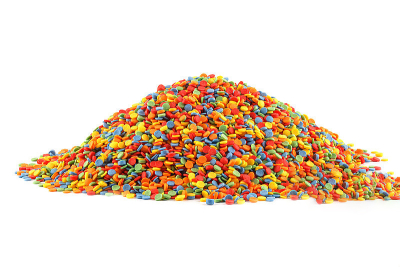
As the key raw material of plastic products, the quality of plastic masterbatch directly affects the performance, appearance and durability of downstream products. To ensure the high quality of our company's products, we carry out refined control from multiple dimensions such as process strictness, ratio stability, production controllability, and comprehensive quality inspection. The following are the core control measures for high quality in the production process of plastic masterbatch:
I. Strict process flow: standardization and precise control
(1) Raw material pretreatment
Strictly screen raw materials such as carrier resins, pigments, and additives to ensure that the purity, particle size, moisture content and other indicators meet the standards (such as moisture content ≤ 0.05%).
Use pretreatment processes such as drying and screening to avoid impurities and moisture affecting dispersibility.
(2) Precision mixing process
Use high-precision metering equipment (such as loss-in-weight feeders) to achieve dynamic monitoring of the formula ratio, and the error is controlled within ±0.3%.
Use high-speed mixers or internal mixers to ensure uniform distribution of each component and avoid local concentration deviations.
(3) Twin-screw extrusion process optimization
Segmented temperature control (melting section, mixing section, homogenization section) is accurate to ±1°C to avoid degradation of heat-sensitive components.
The screw combination design matches the material properties, such as high shear section to improve pigment dispersion, and low shear section to reduce molecular chain breakage.
(4) Cooling and pelletizing
Water ring pelletizing or underwater pelletizing technology is used to ensure consistent particle shape and size (diameter deviation ≤±0.2mm).
Quick cooling and shaping to prevent oxidation or agglomeration caused by high temperature.
II. Ratio stability: digitalization and dynamic control
(1) Formula management
Establish a standardized formula database and lock formula permissions through the MES system to avoid human operational errors.
Retain samples of each batch of raw materials for re-inspection to ensure consistency between batches.
(2) Real-time feedback system
Online infrared spectrometer or near infrared (NIR) monitors melt composition and adjusts feeding speed in real time.
The PID control system is used to dynamically adjust the extruder speed and temperature to cope with raw material fluctuations.
III. Production stability: full process traceability
(1) Equipment maintenance and calibration
Regularly calibrate metering equipment and temperature control sensors, and check the wear status of the extruder screw every day.
(2) Environmental control
The production workshop maintains constant temperature and humidity (temperature 23±2℃, humidity 50±5%) to reduce the impact of the environment on the process.
(3) Batch traceability system
Barcode tracking from raw material storage to finished product delivery, any abnormality can be quickly located.
IV. Quality inspection: multi-dimensional full inspection and verification
(1) Online inspection
The melt pressure sensor monitors extrusion stability, and the colorimeter provides real-time feedback on color deviation (ΔE≤0.5).
(2) Full laboratory inspection
Physical properties: melt index (MFI), density, tensile strength;
Dispersion: observe the agglomeration of pigments under a microscope (≤5μm particles account for ≥98%);
Weather resistance: passed the QUV accelerated aging test, and the color fastness reached level 4 or above.
(3) Customer Collaborative Verification
Provide a sample test report and jointly test the actual processing performance with the customer (such as injection flow marks, film blowing crystal points, etc.).
V. Continuous Improvement Mechanism
(1) SPC Statistical Process Control
Perform CPK capability analysis on key parameters (such as melt viscosity and color difference) (target CPK ≥ 1.67).
(2) Customer Complaint Closed-loop Management
Respond to quality issues within 24 hours, 8D report root cause analysis and implement corrective measures.
Conclusion
The core of high-quality plastic masterbatch is "prevention is better than correction". Through the extreme standardization of process parameters, intelligent process control, and a quality verification system covering the entire life cycle, we ensure that our products reach the industry-leading level in terms of color consistency, mechanical properties, processing stability, etc., and ultimately provide customers with a "zero defect" masterbatch solution.